
The propaganda aspect of the movie -- despite it stemming purely from the writer's deepest convictions -- is a clincher for it is highly unlikely that you'll walk out of a screening of Talvar saying, 'I loved the movie, but I still think the parents are guilty.' If you are swept away by the power of the movie, it's also sure to swing your perception in a certain direction,' says Sreehari Nair.

'Growth is predicated on the misery of large sections of people.' 'Maybe Hindutva will be used to suppress any such unrest.'

'Obedience, service and an over-glorified stress on keeping the family's honour intact keep Muslim women from focusing on their own happiness. So they stay joyless and 'pious,' with an ever-present hint of bitterness for the fun-loving women,' says Zoia Tariq.
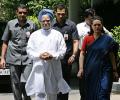
In an interview to Rediff.com's Anita Katyal, Shambhu Srivastava speaks about the need of breaking out of the communal-secular paradigm and focusing on the Congress party's poor performance and its track record in fuelling communalism.

'My question is not why he has accepted the governorship, my question is why did the government offer it to him? By his accepting it, an impression is sought to be created that judges are no better than anyone else and will accept anything.' Fali Nariman, the legendary lawyer, speaks on the controversy over the National Judicial Appointments Bill and former Chief Jusice P Sathasivam's appointment as Kerala governor in an exclusive interview.

Twenty-year-old Sheetal Jain is the daughter of a bar dancer and grew up in Mumbai's red light district. She is now in the US pursuing a course in drumming

Rescued from slavery at age 7 by Kailash Satyarthi's Bachpan Bachao Andolan, Om Prakash Gurjar is today one of the world's 7 top influential youngsters.

With facts and figures, the CAG report has highlighted how Gujarat was far from a role model for states across India, and that the progress made in this province in western India in improving agriculture, education, healthcare and empowerment of women and children, was not exactly creditable, says Paranjoy Guha Thakurta.

'If the State does want to come after you, in India, it can do pretty much anything. And often it isn't as though the orders are coming from the President or prime minister, no, the systems have been built in a way -- or we have allowed them to be built in a way -- that almost encourages crushing of liberties.'
